
What are Electromechanical assemblies?
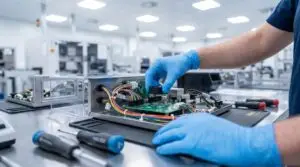
Electromechanical assembly is a broad term to explain the process of combining electrical and mechanical components to create a functioning system. In simple terms, these devices use an electrical signal to create a mechanical movement, or a mechanical movement to create an electrical signal. Hence, electromechanical assemblies are essential elements in the operations of most industries, including agricultural, military, medical, automotive, and aerospace applications.
Common Types of Electromechanical assemblies
Switch and sensor assemblies – Control systems typically use both sensor and switch assemblies. Sensor assemblies convert physical inputs like motion, sound, heat, or light into electrical signals, while switch assemblies control circuits by connecting or disconnecting them. A switch assembly consists of contacts that regulate current flow, wire harnesses that secure the switch, and a switching mechanism such as a toggle or push button for operation.
Power supply – Power supply assemblies generate power by converting a current into the correct voltage and format to power at least one electric load. This is essentially the entire package needed to deliver electricity to a system.
Transformer Assemblies – Transformer assemblies transfer electrical energy between two or more circuits, adjusting voltage levels based on application requirements. They typically consist of primary and secondary windings, a laminated core for efficient energy transfer, insulation for safety, and various accessories such as breathers, cooling tubes, and oil conservators to enhance performance and durability.
Also, read our article on the benefits of outsourcing electromechanical assemblies.
What are the benefits?
Electromechanical assemblies offer enhanced reliability, precision, and efficiency by integrating electrical and mechanical components into a unified system. They simplify installation, reduce wiring complexity, and improve durability by housing critical components in a controlled environment.
One of the key benefits of electromechanical assemblies is that it allows high flexibility and customisation. This is due to its ability to design and manufacture individual components separately; electromechanical assemblies can be designed to specific needs, allowing for a high degree of customisation. Combining various functionalities into one unit also reduces the overall space needed for the system and offers a space-saving solution.
What are the disadvantages?
Maintaining in-house assembly for your electromechanical operations builds up substantial overhead costs, especially when you need to consider the highly skilled specialists and additional space needed to conduct manufacturing. Sino specialists recommend outsourcing electromechanical assemblies to avoid this problem and enhance product quality with specialists you know you can trust.
Electromechanical devices also require regular maintenance to clean contacts and address potential wear issues on mechanical components. However, this maintenance issue won’t be your problem if you outsource your manufacturing and rely on a project manager who offers clarity at every stage of production.
In conclusion, electromechanical assemblies play a vital role in various industries by integrating electrical and mechanical components into efficient, reliable systems. They offer significant benefits, including flexibility and space-saving designs. However, maintaining in-house production can be costly and complex, making outsourcing a practical solution for many businesses. Despite requiring regular maintenance, electromechanical assemblies remain essential for modern technological advancements across multiple sectors.