
For a generation of US procurement teams, “where do we make it?” had a default answer: China. The unit price won the argument, and for a lot of product categories it still does. What changed isn’t that China got worse — it’s that leaning the whole supply chain on one country, five weeks of ocean away, stopped feeling like a strategy and started feeling like an exposure.
Mexico is the answer more US OEMs are now testing. It is next door, it trades with the US and Canada duty-free under USMCA, and its industrial base has spent forty years maturing around exactly the products American companies buy. But “just move it to Mexico” is a slogan, not a plan — and the honest version of this decision has trade-offs that most nearshoring pitches skip.
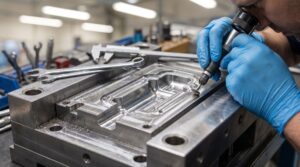
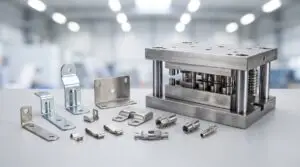
This guide is the version we give our own customers. We build tooling and components in our own factory in Shenzhen and run a mould (mold) repair and tooling facility in Querétaro, Mexico, so we see both sides of this decision every week. Here is why manufacturing in Mexico is accelerating, where it genuinely wins, where China still wins, and how a China + Mexico dual model works in practice.
Why manufacturing in Mexico is accelerating now
Three forces are pushing US companies toward Mexico, and they reinforce each other.
1. Tariffs changed the maths
The US Section 301 tariffs on Chinese goods, introduced in 2018 and expanded since, rewrote the landed cost of a lot of product categories overnight. A 25% duty on a component you’d imported for years doesn’t just dent margin — it can flip the entire make-versus-source decision. Goods manufactured in Mexico and qualifying under USMCA cross into the US duty-free, so for tariff-exposed parts the gap between the two options can be the whole business case.
2. USMCA and proximity
Mexico shares a land border and overlapping time zones with the US. Finished goods move by truck in days, not by sea in weeks. That proximity is not just a freight line item — it means your engineers can visit the floor this week, problem-solving happens in real time, and you carry far less safety stock because the pipeline is short. USMCA gives that proximity a duty-free framework, provided you meet the rules of origin (more on that below).
3. Reshoring and resilience pressure
The 2020–2022 disruptions — pandemic shutdowns, container rates spiking roughly tenfold at the peak, the Suez blockage, port congestion — were a live stress test of single-source, long-distance supply chains, and a lot of them failed. Boards now price resilience deliberately. Mexico became the United States’ largest trading partner in 2023; that wasn’t an accident, it was thousands of these decisions adding up. For most companies the goal isn’t full reshoring to the US — the capex and labour make that hard — it’s moving production closer without giving up cost efficiency. Mexico is the practical middle path. We cover the wider picture in our complete guide to nearshoring manufacturing.
The Querétaro and Bajío manufacturing cluster
Manufacturing in Mexico isn’t spread evenly across the country — it clusters, and the cluster that matters most for precision, export-grade work is the Bajío region in central Mexico: Querétaro, Guanajuato, Aguascalientes, and San Luis Potosí.
The Bajío is where decades of automotive and aerospace investment built a deep, experienced industrial workforce and a dense supplier network. Querétaro in particular has become a hub for aerospace, automotive, appliances, and electronics assembly, with the transport links, industrial parks, and technical talent that high-quality manufacturing needs. For a US buyer, the appeal is concrete:
- A mature industrial base — toolmakers, moulders, machinists, and assembly operations that already build to OEM standards.
- Skilled, experienced labour — not a workforce being trained from scratch, but one that has run export-grade production for years.
- Logistics built for the US market — road and rail corridors purpose-built to move goods north.
- Time-zone overlap — a working day that lines up with US operations, not one that ends when yours begins.
The honest caveat: demand for industrial space and skilled labour in the Bajío has surged, which tightens capacity and competes up wages. The cluster’s strength is also its constraint — it is busy, and getting busier.
What Mexico does well — and where China still wins
This is the section most nearshoring pitches skip, and it is the one that builds a defensible decision. Neither country wins everything. The smart question isn’t “China or Mexico?” — it’s “which parts belong where?”
| Factor | Mexico (nearshore) | China (offshore) |
|---|---|---|
| Unit price | Slightly higher on most parts | Typically the lowest ex-works price |
| Landed cost to US | Often competitive once tariffs, freight and inventory stack up | Can be higher than it looks after Section 301 and freight |
| Lead time to US | 2–5 days by truck | 30–40 days by sea |
| Tariff exposure | USMCA duty-free if rules of origin met | Section 301 exposure varies by HS code |
| Supplier ecosystem depth | Strong in automotive/appliances; shallower upstream | Deepest in the world for tooling, materials, sub-components |
| Tooling maturity | Growing, but not yet China’s depth | Extremely mature, very high volume capable |
| Best for | Tariff-exposed, lead-time-sensitive, US-market production | Complex tooling, very high volume, deep-ecosystem parts |
Mexico wins on proximity, tariffs, lead time, and responsiveness. China still wins on raw unit cost, on the depth of its upstream supplier base, and on mature high-volume tooling. That last point is the one buyers underestimate most: Mexico’s ecosystem for upstream tooling and certain specialised components is not as deep as China’s. Often the right move isn’t China or Mexico — it’s China and Mexico.
The cost comparison: labour, freight, tariffs, lead time
The mistake that sinks most Mexico business cases is comparing the ex-works unit price from a Chinese supplier with the ex-works price from a Mexican one, seeing China win, and stopping there. The number that actually hits your P&L is landed cost — everything it takes to get a finished, compliant part into your warehouse. Here is how the pieces move, in honest ranges rather than invented precision.
| Cost element | Mexico | China |
|---|---|---|
| Ex-works unit price | Slightly higher on most parts | Lowest |
| Labour | Competitive; the historic China gap has narrowed considerably | Historically lowest, but rising for years |
| Freight to US | Lower and more stable (truck, days) | Higher and more volatile (ocean, weeks) |
| Import tariff | Duty-free if USMCA rules of origin are met | Section 301 exposure, varies by product |
| Inventory carrying cost | Lower — short lead time means leaner safety stock | Higher — long transit forces weeks of stock on the water |
| Cost of disruption | Easier and cheaper to contain locally | Costly to fix at 10,000 miles when something slips |
| Effective landed cost | Often competitive once everything stacks | Can be higher than the unit price suggests |
Two levers get undercounted every time. The first is inventory: a 35-day ocean lead time forces weeks of safety stock you simply don’t need behind a 3-day truck — that’s working capital tied up in transit. The second is the cost of being wrong: when a tariff shifts, a container is delayed, or a lot fails inspection, fixing it near your market is far cheaper than fixing it across the Pacific.
None of this means Mexico always wins. For very high volumes of a stable, tariff-light product, China’s unit-cost advantage can still dominate the landed-cost equation. The point is to run the complete number, part by part. We walk procurement teams through exactly this in our total-cost framework for China+1 decisions.
USMCA rules of origin: the basics procurement needs
The duty-free advantage of manufacturing in Mexico is not automatic. It depends on the goods qualifying under the USMCA rules of origin — and getting this wrong is how the whole cost case quietly evaporates. You don’t need to be a customs lawyer, but procurement should understand four things:
- Regional value content. A qualifying product must contain enough North American content — value that originates in the US, Mexico, or Canada — to meet the threshold for its category. Assembling imported parts in Mexico is not, by itself, enough.
- Tariff shift rules. For many goods, non-originating inputs must be transformed enough in Mexico to change their tariff classification. This is what stops “screwdriver assembly” from qualifying.
- Sector-specific rules. Automotive has its own, stricter regional-content and labour-value requirements. If you’re in autos, treat this as its own workstream.
- Documentation. Duty-free treatment requires a valid certification of origin and records that back it up. The paperwork is part of the qualification, not an afterthought.
The practical takeaway: where your upstream inputs come from matters. A part moulded in Querétaro from Chinese-origin resin and Chinese-origin sub-components may not qualify — which is one more reason the China + Mexico question is best answered together, not in isolation.
How a China + Mexico dual strategy works in practice
For most mid-to-large OEMs the realistic answer isn’t binary. It’s a portfolio: keep what China does best in China, move what Mexico does best to Mexico, and design the whole thing so no single country can stop your line. This is the China Plus One strategy in its most practical form.
In practice, the split usually falls out like this:
- Stays in China: complex new tooling, very high-volume runs, and parts that depend on a deep, China-concentrated supplier ecosystem. The unit economics and tooling maturity are hard to beat here.
- Moves to Mexico: tariff-exposed parts, lead-time-sensitive production, final assembly and landing for the US market, and mould repair and maintenance that needs to happen close to the line.
- Handled across both: a phased transition, so you’re not re-tooling and re-qualifying everything at once — the single most underestimated cost in any move.
The catch most companies hit is that running two countries usually means running two unfamiliar relationships across two language and standards gaps — the exact problem that made overseas manufacturing painful in the first place. That’s the problem worth solving before you move a single part. A common early step is transferring existing injection mould tooling between sites, which needs to be planned carefully to protect part quality and timing.
How Sino approaches manufacturing in Mexico
Here’s our angle, and it’s an unusual one. Most companies face this move as an either/or: stay with your Chinese factory and live with the distance, or start over with a Mexican supplier you don’t know and lose the China relationship you spent years building. Sino is structured to remove that trade-off.
We’re a British-Chinese manufacturer — British toolmakers and engineers working alongside our Chinese team inside our own 54,000 sq ft factory in Shenzhen, with English-speaking technical support across the UK, North America, and Mexico. In 2025 we opened a mould repair and tooling facility in Querétaro, in the heart of the Bajío cluster, focused on the nearshore work that benefits most from being close to your line:
- Injection mould repair, maintenance and re-engineering — fast-turnaround tooling support in your time zone, so a damaged or worn mould doesn’t mean weeks of downtime and an ocean crossing. See our guide to injection mould repair and maintenance.
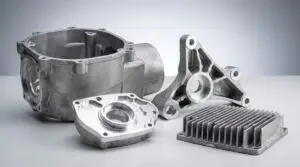
- Components, re-engineering and landing for the Americas — nearshore support that sits between your China production and your US warehouse.
- China scale behind it — the deep supplier ecosystem, tooling capability, and unit economics of a factory we own and operate, not one we broker.
The thread through all of it is one consistent standard: the same British engineering rigour, the same English-speaking project management, and the same ISO 9001 (certified since 2015), Sedex-audited quality system, whichever side of the Pacific your work sits on. You’re not choosing between East and West — you get both, managed by one named team you actually talk to. That’s why the choice of manufacturing partner matters even more in a dual-country strategy than in a single-source one.
Frequently asked questions
Is manufacturing in Mexico cheaper than China?
Usually not on unit price — China’s ex-works cost is typically lower. But on landed cost (unit price plus tariffs, freight, inventory carrying, and disruption risk), Mexico is frequently competitive and sometimes cheaper, especially for tariff-exposed products sold into the US under USMCA. Always compare landed cost, not unit cost.
Why is Querétaro a good place to manufacture in Mexico?
Querétaro sits in the Bajío region, Mexico’s most mature manufacturing cluster for aerospace, automotive, appliances, and electronics. It offers a skilled, experienced workforce, a dense supplier network, strong logistics to the US, and time-zone overlap with US operations — the ingredients precision, export-grade production needs.
What are USMCA rules of origin, and why do they matter?
USMCA rules of origin determine whether goods made in Mexico qualify for duty-free entry into the US. Products must meet regional value-content thresholds and, in many cases, tariff-shift requirements — meaning simple assembly of imported parts may not qualify. Get the rules and documentation wrong and you lose the duty-free advantage, so where your inputs originate matters.
Do I have to move all production out of China to manufacture in Mexico?
No — and for most OEMs you shouldn’t. The strongest approach is usually a China + Mexico portfolio: keep complex tooling and high-volume runs where China’s ecosystem is deepest, and move tariff-exposed, lead-time-sensitive, or US-facing work to Mexico. This is China Plus One in practice.
How quickly can production move to Mexico?
It depends on the part. The pacing item is rarely the factory — it’s re-tooling, tooling transfer, and re-qualification (new first-article inspection, capability studies, and for regulated sectors, PPAP). A phased, part-by-part move is almost always faster and less risky than trying to switch everything at once.
The bottom line
Manufacturing in Mexico isn’t a vote against China — it’s a way to keep what China does well while removing the single point of failure that used to come free with it. Judged on unit price alone, the move looks like a cost. Judged properly — on landed cost, on USMCA-qualifying rules of origin, on the honest price of the risk you’re carrying, and part by part rather than all at once — it usually resolves into a deliberate China + Mexico portfolio that protects your line without giving up the cost base that built your product.
Need help with a project?
The most useful thing when you’re weighing manufacturing in Mexico isn’t a brochure — it’s a real conversation about your specific parts, volumes, and tariff exposure with engineers who run production in both China and Mexico. We’ll help you model landed cost honestly, tell you plainly which parts make sense to keep in China and which to move nearshore, and manage both to one British engineering standard — no middleman, no translation gaps, one named team you actually work with. We’ve been making things better for OEM customers since 2003, with JLR, Toyota, BMW, Honeywell, and GE among them. We’ll complete an NDA before any drawings change hands.