
Your manufacturing partner shapes your product more than any design decision you make after the first quotation is signed. Get that choice right and you unlock speed, quality, and growth. Get it wrong and you inherit problems that quietly compound — missed deadlines, rising costs, eroding customer trust, and reputational damage that takes years to rebuild.
In 2026, choosing a manufacturing partner has become one of the most strategic decisions a product company makes. Tariff volatility, geopolitical realignment, accelerating nearshoring, and rising quality expectations have changed what “the right manufacturing partner” means. The old playbook — lowest unit cost, one supplier in one country — no longer holds.
This guide covers what defines a strong manufacturing partnership today, a practical framework you can use to evaluate any candidate, and how location strategy (China, nearshoring, or reshoring) shapes the partnership you end up with.
What Makes a Manufacturing Partner Different From a Vendor?
A vendor sends quotes and ships parts. A manufacturing partner shares the weight of getting your product built right.
The distinction matters more than it sounds. Vendors optimise for the transaction — the cheapest bid, the fastest turnaround, the simplest scope. A real manufacturing partner optimises for the outcome: your product performing in the field, your customers staying loyal, your team free to focus on the next launch instead of firefighting the last one.
Strong partnerships rest on four things:
- Shared accountability. When something goes wrong — and something always does — a partner owns their piece of the problem instead of pointing at the scope of work.
- Transparent systems. Defined processes for quotation, approvals, change orders, quality control, and delivery. No improvisation.
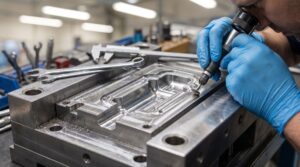
- Engineering depth. Partners flag DFM issues, tolerance risks, and material trade-offs before they become tooling problems.
- Time invested in the relationship. The best partnerships compound year over year. Context accumulates. Trust deepens. Repeat issues disappear.
Sino Manufacturing’s long-standing relationships with international brands reflect this model. Many clients have stayed with us for more than a decade — consistency over time is what separates a manufacturing partner from a supplier.
The Hidden Costs of the Wrong Manufacturing Partner
The true cost of a mismatched manufacturing partner rarely appears on a purchase order.
It shows up later — in the extra inventory buffer you hold because lead times are unpredictable. In the engineering hours spent untangling quality issues that should never have shipped. In the customer refunds, warranty claims, and silent churn from end users who never complain, just don’t come back.
Industry studies consistently put the cost of supplier quality failures at 3–5x the unit cost of the defective parts once you factor in rework, logistics, lost sales, and brand damage. That multiplier is why the decision is strategic, not procurement.
China, Nearshoring, or Reshoring: Where Should Your Manufacturing Partner Sit?
Location strategy is no longer a side question. It’s a core part of choosing a manufacturing partner.
Each approach has real trade-offs, and the right answer depends on your volumes, margins, regulatory environment, and risk tolerance.
| Approach | Best for | Strengths | Trade-offs |
|---|---|---|---|
| China | High volumes, complex tooling, cost-sensitive consumer products | Scale, mature supply base, lowest unit cost, deep tooling expertise | Tariff exposure, longer lead times, IP considerations, geopolitical risk |
| Nearshoring (Mexico, Eastern Europe) | North American or European end-markets, shorter lead times, JIT | Proximity, tariff advantages (USMCA), faster feedback loops, inventory reduction | Higher unit cost than China, smaller supply base, capability gaps in some processes |
| Reshoring | Strategic, defence, or IP-sensitive products | Full control, shortest lead times, strongest IP protection, government incentives | Highest cost, labour scarcity, limited tooling ecosystems, long build-out timelines |
The best manufacturing partners today don’t force you to pick one. They help you build a China Plus One strategy that balances cost, speed, and resilience. That’s why Sino operates from an owned factory in Shenzhen with expanding operations in Querétaro, Mexico — giving clients scale from China and nearshoring capability under the same management standards.
A 7-Point Framework for Evaluating a Manufacturing Partner
Use this framework when you’re shortlisting candidates. It’s the same lens we recommend buyers apply to any potential contract manufacturing partner — including us.
- Capabilities and capacity. Do they actually run the processes your product needs (injection moulding, metal pressing, CNC, assembly) in-house, or do they subcontract? Can they handle your volume today and 3x it in 18 months?
- Quality systems and certifications. ISO 9001 at minimum. IATF 16949 for automotive. ISO 13485 for medical. Ethical audits (Sedex, SGS). Read our guide to ISO 9001 and supply chain success for why these matter beyond the logo.
- Communication and cultural alignment. Who responds to your engineering questions — a sales rep or a project engineer? What language? What time zone? How fast?
- Project management rigour. APQP. Documented master timing plans. A single point of accountability per project. Visibility from quotation to first production run.
- Financial stability. A partner that closes mid-project is the most expensive kind of supplier. Ask for their longevity, client longevity, and growth trajectory.
- Geographic footprint and resilience. A single factory in a single country is a single point of failure. Partners with multi-region capability absorb disruption you’d otherwise carry.
- Scalability path. Can they grow with you from prototype to 1 million units per year without switching suppliers and re-qualifying parts?
Western Standards, Global Capability — The Best of Both Worlds
When expectations, language, and ways of working differ, manufacturing becomes harder than it needs to be. Questions take days to answer. Problems feel distant. Confidence erodes.
Western-managed manufacturing operations bridge that gap. You get the scale and efficiency of offshore production combined with the communication standards, engineering culture, and accountability your team is used to.
Sino follows this model through British ownership and management, supported by wholly-owned factories and English-speaking engineers, designers, and project managers working alongside local teams. This is what allows us to be a manufacturing partner that feels aligned and accessible — even when the tooling is being cut 6,000 miles away.
Why Rigorous Project Management Separates Partners From Vendors
Ask anyone who has lived through a delayed or over-budget manufacturing project what went wrong. The answer is almost always the same: project management.
Without structure, even well-designed products struggle to move smoothly into production. Tasks overlap. Decisions get delayed. Small issues become expensive setbacks.
Strong project management brings order to complexity:
- APQP frameworks force teams to think ahead rather than react later.
- Bespoke Project Books capture requirements, approvals, and progress in a single source of truth.
- Master Timing Plans keep every stakeholder aligned from quotation through first production run.
- Single-point ownership means you always know who to call.
A real manufacturing partner gives you this by default. You always know where a project stands, what comes next, and who is responsible.
Quality Systems That Protect Your Brand
Quality is not inspected at the end. It is engineered in from day one.
Certifications aren’t marketing — they’re evidence of system discipline. ISO 9001:2015 demonstrates structured quality management. Progress toward IATF 16949:2016 signals readiness for automotive and highly regulated sectors. Independent audits from SGS and Sedex membership add layers of accountability your customers increasingly expect.
For a deeper look at how ISO 9001 changes how a manufacturer operates in practice, see our article on ISO 9001 and supply chain success.
Scalability, Capability, and the Long-Term Partnership
Your manufacturing needs rarely stay the same. A prototype becomes a production run. Volumes climb. New components get added. A short-term project turns into a decade-long programme. The right manufacturing partner absorbs that change without forcing you to re-qualify parts with a new supplier.
Sino supports the full spectrum under one roof:
- Injection mould tooling and moulding
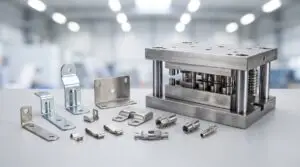
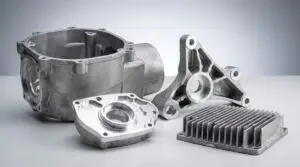
- Metal pressings and die casting
- CNC machining and turned parts
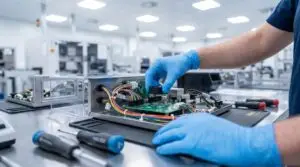
- Electro-mechanical assemblies
- Logistics management and full product realisation
Having these capabilities under a single manufacturing partner reduces complexity, protects your timelines, and keeps every part under the same quality umbrella.
Making Things Better — The Sino Way
“Making Things Better” isn’t a tagline. It’s how we run every project.
Better engineering decisions upstream. Better communication in every language your team speaks. Better quality systems that catch problems before they ship. Better scalability so the partnership grows as your product does.
It also means being honest about what a manufacturing partner can and can’t do. No partner solves bad design. No partner compensates for unclear specifications. What the right partner does is give you the structure, visibility, and engineering depth to make your product the best version of itself.
Choosing the Right Manufacturing Partner Is a Decision That Compounds
Every supplier decision in your organisation has a payback period. A manufacturing partner decision compounds for years — through product generations, market cycles, and growth phases you can’t predict today.
Experience helps teams anticipate challenges. Structured systems keep projects under control. Quality assurance protects brands. Clear communication builds confidence. Geographic flexibility reduces risk. Real partnership makes complex manufacturing feel manageable.
If that’s what you’re looking for in your next manufacturing partner, send your CAD and get feedback before tooling.
Talk to a Sino manufacturing expert today and get an honest assessment of your project.