
CNC turning is the workhorse process behind most cylindrical metal parts in your bill of materials — shafts, bushings, fittings, fasteners, hydraulic adaptors, and electrical pins. The parts are simple. The sourcing decisions are not.
This guide is for buyers preparing to quote a turned-part program: what to specify, what actually moves the unit price, and what separates a supplier you can trust with a million-piece annual run from one that should never have gotten the RFQ.
We run CNC turning at our Shenzhen factory in volumes from a few hundred prototype pieces up to several million parts a week. The shop-floor view below is what we tell our own customers when they ask, “What should I be checking before I sign?”
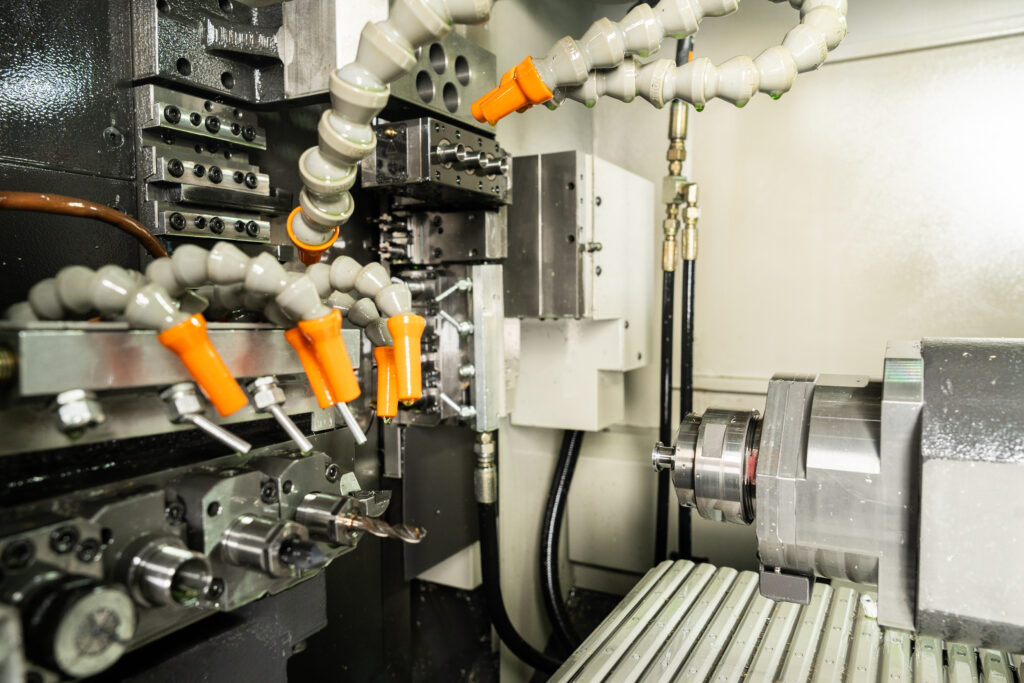
At a glance: when CNC turning is the right call
| Your part has… | Use CNC turning | Consider an alternative |
|---|---|---|
| Rotational symmetry around one axis | Yes | — |
| Diameters from 1 mm to ~250 mm | Yes | Above 250 mm — manual lathe / VTL |
| Threads, grooves, chamfers, knurls | Yes (live tooling handles most in one set-up) | — |
| Off-axis features (cross-holes, flats, slots) | Yes — mill-turn / Y-axis | If features dominate, CNC milling may cost less |
| Annual volume 500 – 5,000,000 pieces | Yes | Below ~500: prototyping/3D print. Above: cam-auto / Swiss multi-spindle |
| Tolerances tighter than ±0.005 mm | Possible — Swiss-type, ground bar stock | Centreless grinding as a secondary op |
Most procurement teams over-specify or under-specify exactly two things on a turned part: the tolerance band and the surface finish. Both directly drive cost. We get to them below.
What CNC turning actually is (briefly)
A CNC lathe rotates the workpiece while one or more cutting tools, mounted on a turret or gang plate, remove material to form the part. Modern machines run live tooling — driven mill heads in the turret — so a single set-up can turn a diameter, mill a flat, drill a cross-hole, cut a thread, and part off a finished piece.
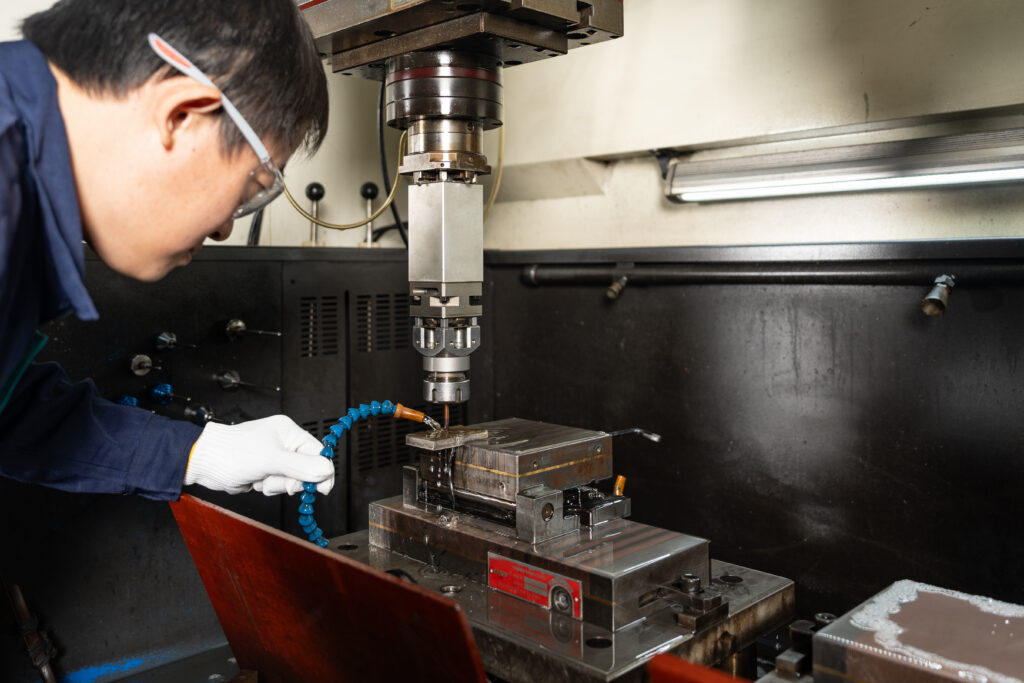
Three machine classes dominate the market:
- Standard 2-axis CNC lathes — bread and butter for shafts, bushings, fittings. Cheap per hour, fastest cycle on simple parts.
- Mill-turn / multi-axis lathes (C-axis, Y-axis, sub-spindle) — for complex parts that would otherwise need a second op on a mill. Higher hourly rate, but eliminates handling and stack-up tolerance.
- Swiss-type lathes — for small-diameter, long, slender parts (medical pins, connector contacts, watch components). Holds the bar stock close to the cutter, so you get tight tolerances on long L:D ratios that a standard lathe can’t.
Picking the right machine class is something a competent supplier should do for you when they quote, not something you should have to specify. A red flag if they ask which machine to use — they’re either a broker or under-equipped.
Common turned part types
Most turned parts on a typical OEM bill of materials fall into a handful of families:
| Family | Examples | Typical materials | Typical tolerance |
|---|---|---|---|
| Shafts | Drive shafts, motor shafts, output spindles | Steel (1045, 4140), stainless (303, 304, 316) | ±0.025 mm on diameter; concentricity TIR ≤ 0.02 mm |
| Bushings & sleeves | Bearing bushings, spacer sleeves, guide bushings | Brass (C360), bronze (SAE 660), stainless | ±0.010 mm bore, H7 fit common |
| Fittings & adaptors | Hydraulic adaptors, pneumatic fittings, hose ends | Steel, brass, stainless | Thread class 6g; sealing surfaces Ra ≤ 1.6 µm |
| Pins & dowels | Locating pins, pivot pins, electrical pins | Hardened steel, beryllium copper, brass | ±0.005 mm, often ground after turning |
| Threaded fasteners (specials) | Custom bolts, studs, captive screws | 4140, 304/316 stainless, A286 | Per ISO 898 / ASTM F606 |
| Hydraulic & pneumatic components | Valve stems, pistons, glands, plungers | 17-4 PH, 416 stainless, 4140 | ±0.013 mm; bore Ra ≤ 0.4 µm |
| Electrical & connector parts | Contact pins, bushings, isolators | C360 brass, copper alloys, PEEK | ±0.010 mm; plating (Ni, Au) common |
If your part doesn’t sit cleanly in one of these families — say, an asymmetric housing with one turned feature — you’re probably looking at a milled or mill-turn part, not a turned one. Quote it as both and let the supplier tell you which is cheaper.
Materials: when each is the right call
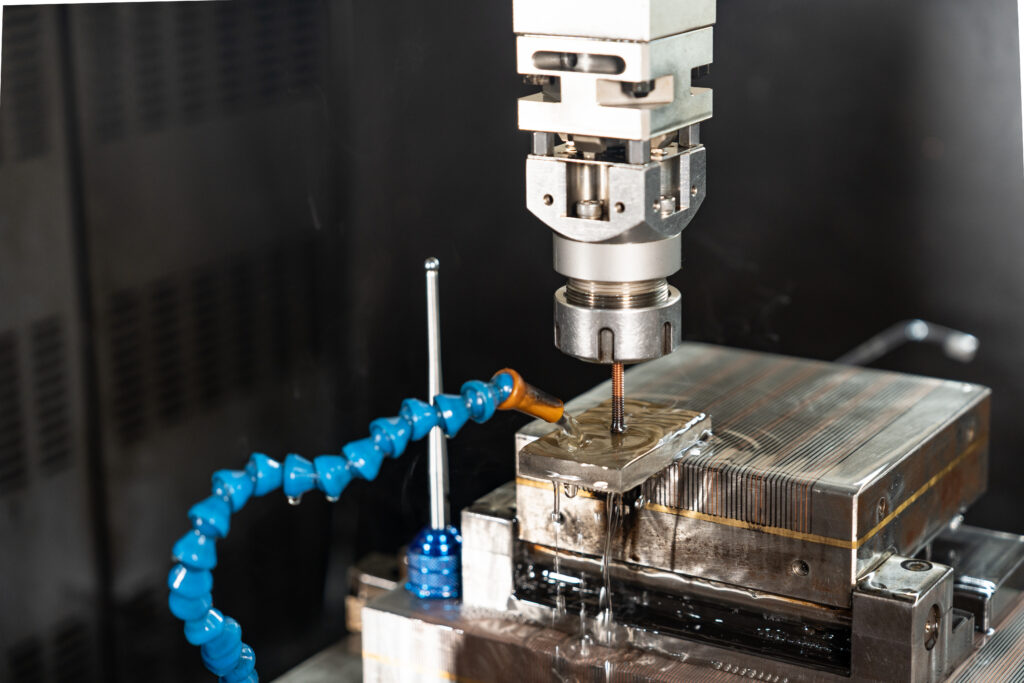
Material drives 30–60% of unit cost on most turned parts. Choosing the right one isn’t only about strength — it’s about machinability, finish, plating compatibility, and lead time on bar stock.
Steels (carbon and alloy)
- 1018 / EN3B — cheap, good machinability, low strength. Brackets, spacers, non-critical shafts.
- 1045 / EN8 — medium carbon, can be heat-treated. The default choice for shafts and pins.
- 4140 / EN19 — alloy steel, pre-hardened (28-32 HRC) versions available. For loaded shafts, hydraulic components, axles. Slightly slower to machine.
- 12L14 — leaded free-machining steel. Cheap and fast to cut. Avoid where lead is restricted (food, medical, EU markets — RoHS).
Stainless steels
- 303 — free-machining stainless. Cuts easily, but slightly lower corrosion resistance and not weldable. Use for fittings, bushings, non-critical hardware.
- 304 — workhorse stainless. Weldable, good corrosion resistance. Slower to machine than 303.
- 316 — adds molybdenum for marine and chemical environments. Medical, food, marine.
- 17-4 PH — precipitation-hardening stainless. Aerospace and high-strength applications.
- 416 — magnetic free-machining stainless. Often used in valve and pump components.
Aluminium
- 6061-T6 — general-purpose, weldable, anodises well. Most common.
- 7075 — higher strength, but harder to machine and not as corrosion-resistant. Aerospace, high-stress structural.
- 2024 — high strength, poor corrosion resistance. Aerospace.
Brass and copper alloys
- C360 (free-cutting brass) — the fastest-machining metal in common industrial use. Default for fittings, fasteners, electrical pins.
- C932 / SAE 660 bronze — bearing bushings, wear surfaces.
- C110 copper — for electrical conductivity. Awkward to machine cleanly.
Plastics
- Acetal (Delrin / POM) — dimensionally stable, machines like a soft metal. Bushings, gears, cams.
- PEEK — high-temperature, chemical-resistant, biocompatible. Medical, aerospace, semiconductor.
- Nylon, PTFE, UHMW — wear and friction applications.
A practical tip we give clients on every kickoff: don’t spec exotic alloys when standard ones will do. We’ve seen drawings call out 17-4 PH for parts that 304 would handle for a third of the price. Ask your supplier’s engineering team to suggest material substitutions — that’s a big slice of the value of working with a factory rather than a broker.
Tolerances on CNC turning — what’s realistic
Standard CNC turning, on production-grade machines with a good set-up, holds these comfortably:
| Feature | Typical tolerance | Tight (cost premium) | Very tight (additional ops) |
|---|---|---|---|
| Outside diameter | ±0.025 mm | ±0.010 mm | ±0.005 mm (grind) |
| Bore (drilled) | ±0.05 mm | ±0.025 mm | ±0.013 mm (ream/bore) |
| Bore (reamed) | ±0.013 mm | ±0.008 mm | ±0.005 mm (hone) |
| Length | ±0.13 mm | ±0.05 mm | ±0.025 mm |
| Concentricity (TIR) | 0.05 mm | 0.025 mm | 0.010 mm (single set-up + Y-axis) |
| Surface finish (Ra) | 1.6 µm | 0.8 µm | 0.4 µm (finish pass) / 0.2 µm (grind) |
| Threads | Class 2A/2B (6g/6H) | Class 3A/3B | Ground / rolled threads |
What pushes the cost curve up:
- Multi-feature tight tolerances on the same part. Holding ±0.010 mm on one diameter is routine; holding it on three concentric features with a 0.01 mm TIR between them isn’t.
- Tolerance bands tighter than the as-turned capability of the chosen material. Soft aluminium and free-cutting brass cut to better finishes than stainless. If you need Ra 0.4 µm in 304 stainless, that’s a finishing operation, not a single pass.
- Length-to-diameter ratios over 6:1. Slender parts deflect under cutting load. Above 10:1 you’re in Swiss-type territory.
- Material specs drifting from machinability optima. Heat-treated alloy steels, hardened beyond ~35 HRC, slow cycle times by 30–50%.
For a deeper look at tolerance bands and how they map to GD&T callouts, see our CNC Tolerances Explained guide.
Surface finishes — when to spec what
Ra is the metric on every drawing, but it’s a starting point, not a complete spec. Three things to think about:
- Functional Ra — what the part actually needs. Sealing surfaces, sliding bearings, and aesthetic faces drive the spec. Non-contact features can run as-machined.
- As-machined vs finished. A standard turning pass on aluminium or brass gets you Ra 1.6 µm cleanly. Steel and stainless typically come off at Ra 1.6–3.2 µm. To go lower, add a finish pass (slower feed, sharp insert), then move into post-process operations.
- Plating, coating, and anodising. These add thickness and can change tolerances. Hard anodise on aluminium adds 25–50 µm per side. Spec the finished dimension and let the supplier work the masking.
Common post-process finishes on turned parts:
| Finish | Typical use | Adds |
|---|---|---|
| Zinc plating (clear, blue, yellow) | Carbon steel hardware, low-cost corrosion protection | ~5–10 µm/side |
| Black oxide | Decorative, light corrosion resistance, low cost | Negligible thickness |
| Nickel plating (electroless) | Uniform thickness on complex parts, wear, corrosion | 5–25 µm/side |
| Anodising (clear, hard, colour) | Aluminium — corrosion, wear, aesthetic | 5–50 µm/side |
| Passivation | Stainless — restores native chromium oxide layer | None |
| Centreless grinding | Tight OD tolerance, fine finish | A separate operation |
| Polishing / lapping | Sealing surfaces, aesthetic | Variable |
If you’re plating to corrosion specs (salt-spray hours), ask your supplier what platers they use and whether testing is in-house. We bring plating in-house for high-volume programmes; for lower volumes we use audited local plating partners and verify on every lot.
Cost drivers: what we see on the shop floor
Procurement people sometimes assume CNC turning is mostly about machine hours. It’s not. Here’s the rough breakdown on a typical mid-volume turned part, and what each lever does to the unit price:
| Cost lever | Share of unit cost | What moves it |
|---|---|---|
| Material | 30–60% | Bar stock grade, diameter, lead time, scrap rate |
| Cycle time | 20–35% | Geometry, tolerance, finish, machine choice |
| Set-up & programming | Amortised over run | One-time; matters a lot below 1,000 pieces |
| Tooling consumables | 5–10% | Insert wear, dictated by material |
| Secondary operations | Variable | Grinding, plating, heat treat, threading |
| QC and packaging | 3–8% | Sampling plan, certs, packaging spec |
The non-obvious lever is run length. Set-up on a multi-feature turned part can be 2–6 hours. Spread across 100 parts, that’s a punishing per-piece cost. Spread across 10,000, it’s negligible. If you’re prototyping, expect prototype prices. If you’re buying production, commit to a production run and the unit cost falls dramatically.
The other lever procurement teams tend to undervalue: family quoting. If you have ten similar parts, quote them together. A supplier can amortise programming, fixturing, and material purchasing across the family — and a good one will pass that saving on.
How to specify a turned part: the RFQ checklist
The single biggest cause of bad quotes is incomplete RFQs. If you want apples-to-apples pricing across suppliers, send all of this:
Drawings and CAD
- 2D drawing in PDF (titled, revision-controlled, dimensioned)
- 3D model in STEP (.step / .stp) — neutral format, not native CAD
- GD&T callouts where they matter — datums, position, concentricity, perpendicularity
Material
- Specification (e.g. “AISI 304 stainless per ASTM A276”) — not just “stainless”
- Heat treatment / condition (e.g. “annealed, ≤ 95 HRB”)
- Approved substitutes if any
Tolerances and finish
- General tolerance block (e.g. ISO 2768-m) plus tighter tolerances called out per feature
- Surface finish per feature (Ra in µm, not just “smooth”)
- Edge break / deburr requirements
Quantity and schedule
- EAU (estimated annual usage) and order quantity
- Number of years on the programme if known
- Target lead time for first article and production
- Packaging and labelling spec (carton size, count, anti-corrosion, barcode)
Quality requirements
- Inspection level (AQL, sampling plan)
- Required certs: material certs (3.1 / 3.2 per EN 10204), CofC, PPAP level if automotive, IQ/OQ/PQ if regulated medical
- First Article Inspection (FAI) — yes/no, AS9102 format if aerospace
Compliance
- RoHS / REACH if EU-bound
- Conflict minerals reporting if applicable
- Country-of-origin requirements (USMCA, anti-tariff strategies)
For a deeper checklist on supplier selection, see our Turned Parts Manufacturer Selection Guide. For machine-class selection, see 3-Axis vs 4-Axis vs 5-Axis CNC.
Industry-specific considerations
Different industries have different non-negotiables. Here’s what we see most often:
| Industry | Typical turned parts | Tolerance band | Must-have certs / specs |
|---|---|---|---|
| Automotive | Drive shafts, bushings, fasteners, hydraulic adaptors, sensor housings | ±0.013 to ±0.025 mm | IATF 16949, PPAP Level 3, full traceability, capability studies (Cpk ≥ 1.33) |
| Medical | Surgical pins, implant components, fluidic fittings, instrument shafts | ±0.005 to ±0.013 mm | ISO 13485, biocompatibility (ISO 10993), DMR / DHF documentation, lot traceability |
| Electronics & connectors | Contact pins, sleeves, threaded inserts, isolators | ±0.010 mm; plating critical | RoHS, REACH, IPC standards, plating thickness certs |
| Industrial / hydraulics | Valve stems, pistons, fittings, glands, manifold inserts | ±0.013 to ±0.025 mm; sealing surfaces Ra ≤ 0.4 µm | ISO 9001, pressure testing, material 3.1 certs |
Each tolerance band roughly doubles cost as you move tighter. Specify what the function actually needs, not what feels safe.
Quality certifications: what they actually mean
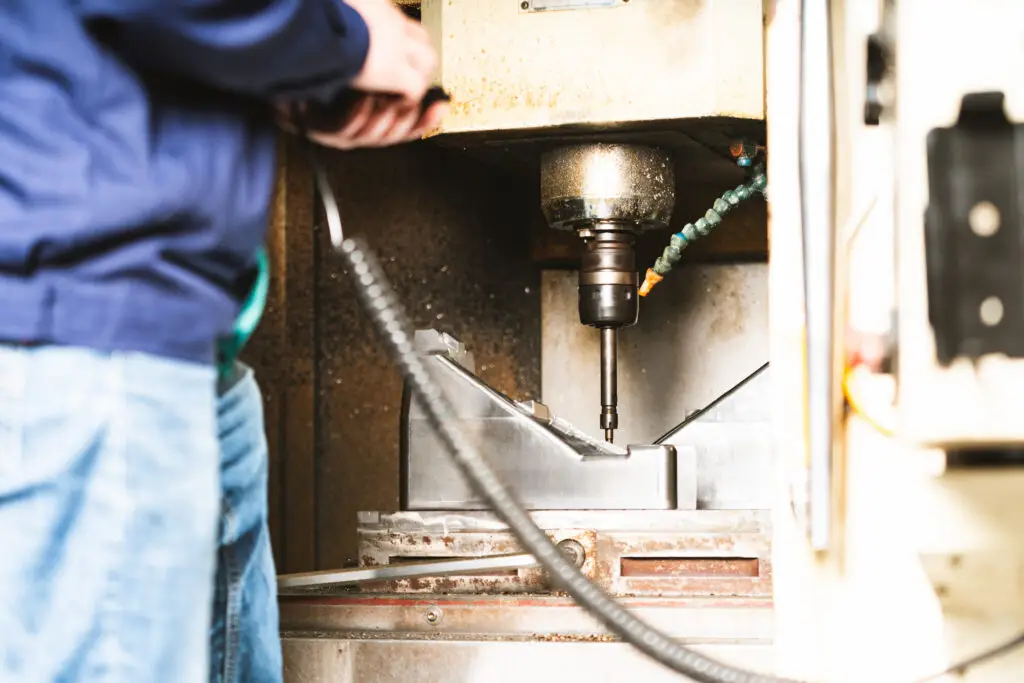
Procurement teams collect cert logos like Pokémon. Most of them mean less than they should — except these four:
- ISO 9001:2015 — the floor. A supplier without ISO 9001 is not a serious commercial partner. Verify the certificate is current and from an accredited body (UKAS, ANAB, etc., not “self-certified”).
- IATF 16949 — automotive-specific quality management. If you’re buying for a Tier-1 or OEM automotive programme, this is non-negotiable. It implies PPAP, APQP, and capability study competence.
- ISO 13485 — medical device quality management. Not the same as ISO 9001 — far stricter on traceability, change control, and DHF/DMR documentation.
- AS9100 — aerospace quality management. Builds on ISO 9001 with risk management, configuration control, FOD prevention.
Other certifications worth checking depending on your needs: ISO 14001 (environmental), Sedex/SMETA (ethical and labour), ITAR registration (US defence work), country-of-origin certifications for tariff strategies.
A note on Chinese suppliers and certifications: ask to see the auditor’s report, not just the certificate. Some certs are issued by less rigorous bodies. A supplier that won’t share the audit report is hiding something. We share ours on request — contact us if you’d like a copy of our latest ISO 9001 audit.
Red flags in supplier conversations
After 20 years sourcing and producing turned parts, these are the patterns that predict trouble:
- No questions on the drawing. A good supplier always comes back with two or three clarifying questions on tolerances, finishes, or material substitutions. Silence means they didn’t read it.
- Quote arrives in under 24 hours on a multi-feature part. Real engineering takes longer. Sub-day quotes on complex parts are guesses.
- Unit price is dramatically below the others. Something is being skipped — material grade, secondary ops, inspection. Ask exactly what’s included.
- No DFM feedback. A factory making the part will spot things to optimise. A broker won’t, because they’re not making it.
- Won’t disclose where production happens. Trading companies and brokers obscure this. You’re entitled to know which factory is making your part and to visit it.
- No written quality plan for production. PPAP, control plans, FAI, capability studies — these aren’t optional on production parts, they’re the spec.
What a good supplier conversation looks like instead: questions on your drawing, a suggestion or two on material or tolerance to save cost, a clear breakdown of price by material / cycle / secondary ops, and a named engineer you’ll be working with on the programme.
Frequently asked questions
What’s the minimum order quantity for CNC turning?
Most production CNC turning shops will run from 100 pieces up. Below that, set-up costs dominate the unit price. For prototype quantities under 100, expect to pay prototype rates — typically 3–10× the production unit cost. Some shops will run as low as 25 pieces but charge a set-up fee separately.
How tight a tolerance can CNC turning hold?
Standard CNC turning routinely holds ±0.025 mm on diameters and ±0.05 mm on lengths. With careful set-up, premium machines, and stable material, ±0.010 mm is achievable in a single op. For tolerances tighter than ±0.005 mm, plan on a secondary operation — centreless grinding, honing, or lapping. Swiss-type lathes can hold ±0.005 mm directly on small-diameter parts.
Which materials are cheapest for CNC turned parts?
For carbon steel parts, 12L14 is typically the cheapest because it cuts fast — but it contains lead, which restricts use in food, medical, and many EU applications. For lead-free options, 1018 and 1045 are next-cheapest. In stainless, 303 is the most cost-effective because it machines well. In non-ferrous, C360 brass is the fastest-machining material in common use. Aluminium 6061-T6 is the default for non-ferrous structural parts.
How do I get an accurate quote for CNC turned parts?
Send a 2D drawing, a 3D STEP file, the material spec (with grade and condition), tolerances per feature, surface finish per feature, the order quantity and estimated annual usage, and any compliance or certification requirements. The more complete the package, the more accurate (and competitive) the quote. Incomplete RFQs get padded quotes — suppliers price in the unknowns.
Get a process estimate from a factory that owns its machines
If you’re sizing a CNC turning programme — first run, transfer from another supplier, or a fresh sourcing exercise — we can give you a process estimate from our own shop floor in under 48 hours.
What that means in practice: a real engineer reviews your drawing, suggests material or tolerance changes that could save cost without affecting function, and gives you a price breakdown by material, cycle, and secondary ops. Not a brokered quote with a markup. Not a platform algorithm. An estimate from the people who’ll actually run the parts.
We’re ISO 9001 certified, Sedex audited, and have been making things better for OEM customers since 2003 — JLR, Toyota, BMW, Honeywell, GE among them. NDA available before drawings change hands.