
Electro-mechanical assemblies, which integrate mechanical and electrical components, must meet strict performance and reliability standards. Even a single failure can cause costly downtime, safety risks and reputational damage. That’s why testing and validation are essential to delivering reliable electro-mechanical assemblies across industries such as robotics, aerospace, automotive and industrial automation.
What Are Electro-Mechanical Assemblies?
Electro-mechanical assemblies combine mechanical components—such as gears, motors and actuators—with electronic elements like sensors, circuits and controllers. This integration enables machines not only to move, but also to process data and respond intelligently to their environments.
Key benefits include:
- Greater efficiency and adaptability
- Improved energy optimisation and durability
- Enhanced safety and reliability
- Ability to perform complex tasks beyond mechanical or electrical systems alone
These advantages make electro-mechanical assemblies fundamental in sectors including automotive, aerospace, robotics, consumer electronics and industrial automation.
Why Testing Matters
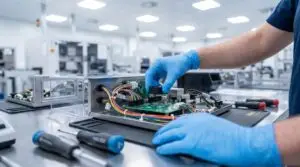
Testing verifies that electro-mechanical assemblies perform as intended before reaching end users. It ensures:
- Compliance with design specifications
- Safe and reliable performance under stress
- Efficiency and responsiveness in different operating conditions
- Prevention of costly failures through root cause analysis
Simply put, testing is the first line of defence against defects and performance issues.
Types of Testing in Electro-Mechanical Assemblies
Electro-mechanical assemblies undergo several forms of testing to confirm reliability:
Functional Testing
Checks movement, electrical responses, sensor accuracy and communication with other systems.
Environmental Testing
Simulates real-world conditions such as extreme temperatures, humidity, vibration and dust exposure—vital for automotive and aerospace applications.
Electrical Testing
Assesses insulation resistance, continuity, voltage tolerance and EMI compliance to prevent electrical failures.
Mechanical Testing
Evaluates durability, strength and wear under operational loads.
Integration Testing
Verifies communication, sequencing and coordination between modules for smooth overall performance.
The Importance of Validation
While testing focuses on components and functions, validation ensures the assembly works reliably as a whole under real-world conditions. It bridges the gap between lab simulations and real-life deployment, confirming readiness for market use.
Validation provides:
- Confidence in long-term reliability
- Assurance of compliance with safety standards
- Reduced risk of recalls and warranty claims
Building Reliable Electro-Mechanical Assemblies
Thorough testing and validation are non-negotiable for electro-mechanical assemblies. By rigorously assessing performance and validating real-world functionality, engineers deliver products that are safe, reliable and built to meet customer expectations.
Ready to Ensure Reliability in Your Electro-Mechanical Assemblies?
Don’t leave safety or performance to chance. Partner with our expert engineers at SINO to implement rigorous testing and validation processes that guarantee your assemblies meet the highest standards. Contact the SINO team today to safeguard your products and deliver engineering excellence.