
Metal parts have long been essential to modern technology, automotive, medical, and construction industries. Two common manufacturing methods are metal stamping and die casting. Understanding their differences can help you choose the best method based on design complexity, material type, and production volume.
Metal Stamping vs Die Casting: The Process
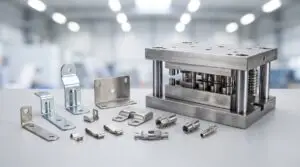
Metal Stamping involves placing a flat sheet of metal into a stamping press, where a tool and die shape it. Pressure is applied to cut, bend, or form the metal into the desired shape. Metal stamping typically works best with thinner gauge materials such as steel, aluminium, brass, copper, and their alloys. It is highly efficient for mass-producing components and is commonly used in industries such as automotive, aerospace, and electronics to produce complex designs with precision.
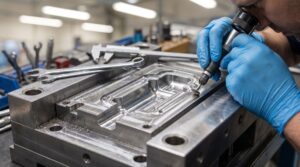
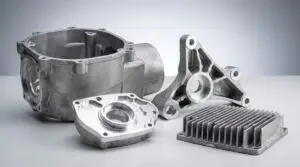
Die Casting involves injecting molten metal into a mould under high pressure. The moulds, usually made from steel, shape the metal into intricate forms with high accuracy. Die casting is generally used with non-ferrous metals like aluminium, magnesium, zinc, and their alloys, which are melted before injection. This process is commonly used to produce parts with thin walls and complex geometries, such as engine components, electronic housings, and industrial parts.
The key difference between metal stamping and die casting is their materials and processes. Metal stamping uses flat metal sheets, while die casting requires injecting molten metal into a mould. Stamping can be used with ferrous and non-ferrous metals, making it suitable for a wide range of material types. Die casting, on the other hand, is typically limited to non-ferrous metals like aluminium, zinc, and magnesium alloys.
Metal stamping specialises in producing precise, detailed shapes, though the technique is generally limited to 2D or 3D objects, depending on the sheet thickness. In contrast, die casting enables the creation of more complex, fully 3D designs, including pieces with thin walls and intricate details. While stamping is ideal for the high-volume production of simpler parts, die casting is better suited for producing large quantities of high-precision, long-lasting components with complex geometries.
Metal Stamping vs Die Casting: Pros and Cons
Pros of Metal Stamping
- High-Speed Production: Metal stamping is a fast process that can produce components rapidly, making it ideal for large-scale projects.
- Efficiency and Consistency: The method ensures consistency and uniformity in quality across all parts, making it fit for key industries such as automotive, aerospace, and electronics.
- Cost-Effective for High Volumes: The cost per part decreases significantly once the dies are produced, making it an excellent option for large production runs.
Cons of Metal Stamping
- Limited to Sheet Metal: Metal stamping is typically utilised for flat sheets, which limits its ability to create 3D parts or complex shapes.
- Material Stress: Material stress may develop during the stamping process, resulting in deformation, cracks, or faults in the finished product.
- Tooling Costs: Although cost-effective in large quantities, the initial tooling setup can be expensive and time-consuming.

Pros of Die Casting
- Ability to Create Complex Geometries: Die casting is well-suited for producing parts with intricate designs and features, allowing for more flexibility in shape and function.
- High Strength and Durability: Die casting produces solid, durable parts that can endure demanding applications, making it beneficial for automotive, aerospace, and consumer products.
- Excellent Surface Finish: Die cast parts often have a smooth surface finish that requires little post-processing, saving time and effort.
Cons of Die Casting
- Higher Initial Costs: Die casting moulds are more expensive to design and build, resulting in higher upfront costs than metal stamping.
- Material Limitations: Die casting is typically limited to nonferrous metals such as aluminium, zinc, and magnesium, which limits its utility in applications that require ferrous metals such as steel.
- Longer Lead Times: Due to the intricacy of mould design and production, lead times for die casting might be longer, making it less ideal for projects that require a quick turnaround.

Choosing between metal stamping and die casting is based on project needs. Metal stamping is ideal for producing simple, consistent parts in large quantities from sheet metal, especially when speed and material variety are critical. Die casting is perfect for producing complicated, sturdy components with high-quality surface finishes, but the increased cost and longer lead times should be considered.
Metal Stamping vs Die Casting: How to Choose
Consider your project’s requirements before selecting between die casting and metal stamping. Metal stamping is well-suited to high-volume production of simple or moderately complex parts, resulting in greater efficiency and cost savings for large orders. It is effective on a wide range of metals, including ferrous and non-ferrous.
Die casting, on the other hand, is better suited to producing parts with elaborate designs, complex shapes, or thin walls because of its high precision and intricate capabilities. However, it is usually limited to nonferrous metals such as aluminium, zinc, and magnesium.
Metal stamping has higher initial tooling costs but becomes more cost-effective with bigger production runs. Die casting, while more expensive initially, is optimal for creating complex components in large quantities. Its high-quality surface finish often reduces post-processing costs.
In conclusion, metal stamping is often better for easier high-volume parts, whereas die casting produces intricate and precise components. Contact our support team, who can recommend the best options for your project’s needs.