
What is Injection Moulding?
Injection moulding is a manufacturing process involving injecting molten plastic into a mould, cooling it, and solidifying it into your chosen part. It’s an efficient high-production method used to create a variety of plastic parts in a wide range of industries, from automotive to medical.
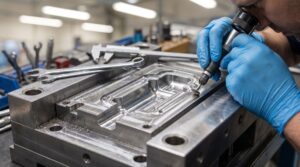
Sino has been manufacturing a wide variety of precision injection mould tools since 2003. With 21 years of specialist experience, you can feel reassured that every functional, aesthetic, and cost challenge is resolved.
Injection moulding has plenty of advantages, such as a low unit cost, fast production cycle, design flexibility, and dimensional accuracy. However, defects can occur if the equipment, manufacturing process or materials are not managed properly, and this poses a threat to the quality of the end product. In this blog, Sino will take a deep dive into injection mould defects and how to avoid them, resulting in flawless products that are ready to export.
Common defects in Injection Moulding
Sink Marks – These are small depressions or dents on the surface of the part and occur on thicker sections of the product that take longer to cool. Excessive material shrinks occur because of insufficient cooling time or an improper structural design. Although the cooling rate is the most common reason that this occurs, dents could also appear from packing pressure, injection pressure or mould temperature.
Flow Lines – These are visible lines or streaks that occur on the narrow surface of the moulded parts and usually appear close to the mould’s entry point. These streaks indicate the path that the molten material has travelled as it flows into the mould. Flow lines appear when the molten plastic moves through the mould at varying speeds and solidifies at different rates. The wall thickness of the mould can also affect the likelihood of these streaks appearing since the plastic will solidify at different rates, this will affect the overall appearance of your product and increase waste levels.
Short Shots – These are incomplete parts that appear due to insufficient material filling and flow restriction from blocked or narrow gates. When you have a short shot defect, the molten material does not flow quickly enough to fill the mould cavity, and this results in the distortion of the final product. The melting temperature can also contribute to this and affect the flow of the molten plastic to all areas.

How To Prevent Common Defects
Sink Mark Solutions – One of the first things you need to consider is to adjust the temperature, this will help to balance the cooling rate across the part. By increasing the cooling time, the material will cool uniformly before it is ejected, avoiding differential shrinkage.
Another consideration is to reduce the thickness of the mould wall to promote quicker cooling. By redesigning the product to maintain uniform thickness, the chance of sink marks occurring is significantly reduced.
Flow Line Solutions – Low injection speed or pressure can cause the plastic to cool down before the mould fills, so it’s important to increase the injection speed and pressure, to ensure that the molten spreads across the whole mould cavity. You will also need to optimise the gate location and design, if you relocate the gate closer to the thicker sections of the mould, it will allow a smoother and more consistent flow of the molten plastic.
Improved venting can allow trapped air to escape from the cavity and gating system, this prevents a vacuum from forming between the plastic and cavity wall and it ensures a smoother material flow without the appearance of streaks.
Short Shots Solutions – One of the main reasons that short shots appear is because of the speed of the injection; by increasing the speed, the material should be able to cool and solidify throughout the whole mould. Another factor you need to consider is the shot size, an adequate amount of molten plastic must be injected to fill the whole mould. It’s also important to optimise the gate size and location, as improper gate size can restrict material flow. You could add multiple gates to ensure that there is an even flow of material into the mould.
Raising the mould temperature to keep the plastic flowing for a longer period of time will guarantee that the entire mould is full, this is particularly essential for products with intricate designs.
Sino’s highly skilled technical designers consider all these factors when the tool design stage begins to ensure that common defects are avoided throughout the manufacturing process. Our plastic injection mould toolroom in Shenzhen follows a thorough process with a Western approach to ensure that all manufacturing standards and safety procedures are followed.
Avoid common defects in the manufacturing process and allow Sino to help today!
Need help with a project?
Choosing the right moulding method is crucial. Whether you need durable automotive parts, precision electronics components, or customised medical devices — Sino’s team will help you get it right from the start.
We’ll complete an NDA and provide expert advice tailored to your requirements, timescale and budget.