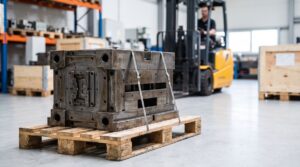

What is Injection Moulding and how can it be used for LED lighting?
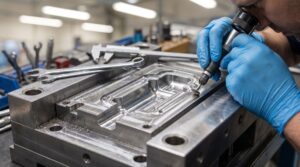
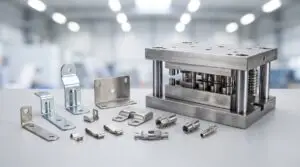
Injection moulding is a manufacturing process involving injecting molten plastic into a mould, cooling it, and solidifying it into your chosen part. It’s an efficient high-production method you can use to create a variety of plastic parts in a wide range of industries, from automotive to medical.
Injection Moulding is commonly used for LED light production and used to create the casings and lenses that are vital for light distribution. An LED lens is an optical component designed to control the light emitted from an LED source by redirecting or spreading it. The production must follow a particular process with the correct materials for an efficient lighting system. The use of injection moulding is highly suitable for LED lighting due to its ability to create the complex, durable and consistent shapes needed.
Sino’s commercial lighting work goes back to 2003, with an expert understanding of commercial lighting OEM’s needs, like emergency lighting, LED heatsinks & lenses, and spaces that meet the IP68 water tightness standards.
In this blog we’ll explore the factors you need to consider when following the injection moulding process for LED lighting, and the benefits of injection moulding over other techniques.
Factors you need to consider for Injection Moulding:
Material selection
Material selection is a significant part of the injection moulding process. Specialists recommend the choice of high-performance plastics, such as Polycarbonate and Acrylic. These materials offer optical clarity, impact resistance, and transparency. It’s important to consider transparency, cost for mass production, toughness to withstand differing temperatures, and the likelihood of shrinkage, which we’ll explore further now.
Mould shrinkage
Injection moulding shrinkage refers to how much the polymers will contract during the cooling process. In the injection moulding process the material shrinks as it cools, but the amount it shrinks by depends on several factors, such as plastic composition, molecular weight, additives, and stress level.
Ways to reduce shrinkage from occurring are optimising the cooling effect, reducing the plasticising temperature, increasing the injection pressure speed and reducing the wall thickness of the material used. A material with a higher molecular weight and viscosity will result in a higher level of shrinkage so this should be avoided.
Benefits of Injection Moulding for Lighting:
Low waste production:

Injection Moulding is a great manufacturing method for the environment because it produces minimal waste. Additional Plastic created during injection moulding can be melted down and reused in another project, reducing reliance on new raw materials. Many modern manufacturing tools have integrated “predictive maintenance technology”, which recognises faults earlier in production to further reduce waste.
Detailed Design and Precision:
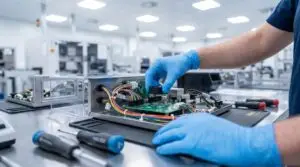
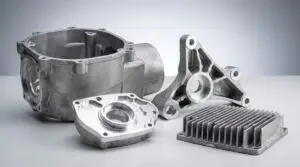
Injection moulding can create precise and intricate shapes, making it perfect for LED housings and fixtures that require exact dimensions to accommodate LED chips, circuits, and wiring. By moulding thermally resistant materials like polycarbonate, LED housings can withstand the heat generated by the LEDs, offering both structural integrity and heat resistance.
Repeatability:
Repeatability in manufacturing refers to the ability to consistently produce parts with minimal variation, which is essential for LED lighting due to the high precision requirements for optical quality, fit, and performance. Injection moulding requires dimensional consistency to manage light dispersions and minimise glare. As well as that, Injection moulding suits high-volume production due to the speed and efficiency of the automated machinery.
Affordability:
Once the mould is designed, each part is cheap to produce, making it ideal for high-volume LED lighting products such as bulbs and fixtures. As demand increases, the cost per part decreases, making the injection moulding process exceptionally economical. Although the initial mould cost is expensive, these moulds are durable, and can be reused over millions of cycles – making them profitable over time.
Sino knows that 9 times out of 10 injection moulding is the most efficient technique for creating parts for LED lights, due to its affordability, precision, low-waste production, and repeatability for mass production. These features make injection moulding a better option over techniques like CNC machining or vacuum casting. To discover the lighting services that Sino offers, check out https://www.sinomanufactur.wpenginepowered.com/market-sectors/commercial-lighting/.