
When you think about the most popular industrial methods for creating metal parts, we are sure that die casting and CNC machining come to mind. The concept of using moulds to create metal objects dates back thousands of years, but specifically, die casting emerged in the early 1800s, whereas CNC machining was developed in the late 1940s. This is also reflected in its functionality; CNC machining relies on computer-controlled tools to remove material from a solid block, creating a part with precise dimensions. Whereas, die casting has historically been more of a manual operation, but has shifted to be more automated and computer-aided throughout the years.
Throughout this blog, we will discuss the technique behind these key methods and when each should be used.
What is Die Casting?
Die casting is a manufacturing process for producing metal components with high precision and dimensional accuracy. It is used in many industries that require dimensional accuracy, such as the medical, automotive, and aerospace sectors.
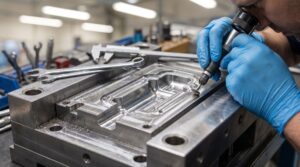
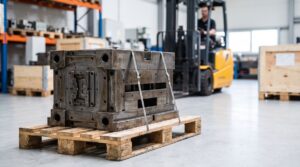
Die casting operates by injecting molten metal under high pressure into reusable moulds, known as dies. The metal stays there until it cools and hardens, resulting in a final casting. This casting will then need to undergo further finishing techniques for final refinement and to meet precision standards.
When is Die Casting used?
Die casting is a popular technique in the automotive industry because of the features of its output and its capability to mass produce parts with a high level of precision. But what are the key features that make this technique stand out?
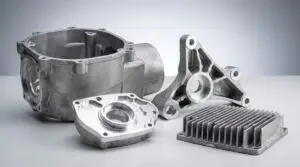
Lightweight components – Die casting is compatible with lightweight non-ferrous metals such as aluminium, magnesium and zinc alloys. The lightweight metal maintains high strength-to-weight ratios due to the refined microstructures from rapid cooling. This is ideal for components such as engine blocks, brackets and structural EV parts.
Design freedom – Die castings’ ability to mould thin walls (1-2mm) and functional surfaces improves structural rigidity and enables multi-functional components.
Fast cycle times – This method offers fast cycle times, ranging from 10 to 60 seconds per shot, allowing for high-volume production. This means reduced lead times and faster production, which is crucial in the competitive automotive industry.
Find out more in our blog on the benefits of die casting.
What is CNC Machining?
CNC machining is the automated control of machine tools by a computer and has evolved from numerical control(NC). It has enabled easier programming and real-time adjustments, allowing it to gradually replace NC. The computer software of CNC dictates the movement of factory tools, and the desired cuts are programmed into the software for the corresponding tools and machinery. CNC is a subtractive process, meaning that it creates parts by removing material from a solid block to achieve the desired part. Whereas die casting is a casting process in which the part is created from a mould.
When is CNC machining used?
CNC machining supersedes the limitations of manual control and doesn’t rely on live operators to prompt and guide commands. When compared to manual machining, CNC accelerates production, increases accuracy, and excels in low to medium volume production. For a fair comparison, let’s explore some of the features that stand out when using CNC in the automotive industry:
- Repeatability and Reliability
CNC machines provide consistent replication of parts across production batches, thanks to digitally controlled tool paths. This enables the high-volume production of identical parts such as gearbox components. - Material Versatility
CNC machining supports a wide range of materials, from aluminium and titanium to composites and high-strength steels. This variety offers lightweighting strategies, such as using aluminium for engine parts for fuel efficiency without compromising on strength. - Thermal and Mechanical Stability
CNC machining is designed to withstand thermal expansion and mechanical stress. This ensures stability over long production runs and is critical for maintaining dimensional integrity for all parts.
In this blog, we have examined the core features of both die casting and CNC machining, highlighting the distinct advantages each technique offers. By exploring their applications within the automotive industry, we’ve uncovered how these manufacturing methods contribute to high precision, efficiency, and performance, making them indispensable to modern automotive engineering and production.