
Metal stamping is a versatile manufacturing process that’s used in a wide range of industries, from medicine and manufacturing to automotive and aerospace. But how does it work?
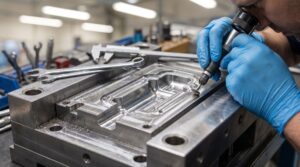
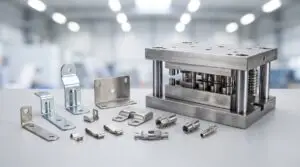
In the simplest terms, metal stamping is the process of shaping flat metal sheets using a specialist tool called a die to cut, bend, and form the metal into the desired shape.
Sino has been producing high-quality metal stamps for over 15 years at our 54,000 sq ft factory in Shenzen, where a thorough process is followed, stamping all metal into the correct shapes and designs without deformation.
Metal stamping offers many benefits, such as precision, cost-effectiveness for large-scale production, reuse of scrap to minimise waste and customisation options. However, there are also common issues for you to consider in the manufacturing stage. In this article, Sino specialists will talk you through all the key considerations for your metal stamping process.
Advantages of Metal Stamping
Precision and Consistency:
The use of dies and automated presses ensures that every metal part produced is nearly identical. It’s a manufacturing process that offers repeatable precision across multiple projects.
Precision metal stamping uses microstamping, crafting miniature parts into the desired product without error.
Projects with precise designs typically use computer modelling, which allows the manufacturers to check for defects before they begin this process.
Factors to consider for ultimate precision:
- Ensure that any bends are not made too close to the hole
- Notches, tabs and slots must be designed with a thickness of at least 1.5x of thickness of the material
- Note down the burr direction before any precise cuts
Cost Effectiveness:
Metal stamping is one of the most cost-effective services for large-scale production, requiring minimal machinery and staff, labour costs and machinery expenses are reduced in comparison to other methods such as roll forming.
Factors to consider to reduce cost:
- Arrange design layouts to reduce waste, ultimately reducing costs
- Avoid exotic alloys
- Purchase metals when the market dips for the best offers
- Cheaper metals can be strengthened by secondary processing
Durability and Strength:
Correct material selection is crucial to the durability and strength of your metal parts. Methods like cold forming use a forging technique that shapes metal at around room temperature, and this helps to increase the tensile strength and the integrity of the metal properties.
- Factors to consider to increase strength:
- Heat-treating techniques (such as oil quenching or gas nitriding)
- Electroplating can add a layer that resists damage and corrosion
Versatility and Speed:
Metal Stamping is incredibly versatile; you can use a variety of metals, including steel, aluminium, brass and copper, making it adaptable and versatile, with a wide range of complex shapes, scalability, and a high-speed production process.
Factors to consider:
- Cost of different materials
- Investment cost of high-speed stamps
- Need for specialist training

In conclusion, metal stamping is a highly efficient, cost-effective, and versatile manufacturing method, particularly well-suited for high-volume production. It delivers precise, durable components with consistency while reducing material waste and labour costs through automation. The ability to handle a wide range of metals and produce complex shapes quickly makes it ideal for a wide range of industries.
There’s a lot ot consider before you commit to a metal stamping process, if you need expert advice or guidance before you make decision for your next project then get in touch, and we’ll help you build a plan that works for your processes, products, and customers.